


West coast · 18 km from the airport
Bang Tao
October 2026 · n = 13
Hotel 4★, per night$120+48%
- Villa 3-bed, per month
- $7,372
- Airport taxi, one-way
- $18
- A day, mid budget
- $41
Flights, visa, season and a weekly budget in INR — for travellers from India.
Month-end reference rates since January 2014: what one INR buys in Thai baht, and what that does to the price of Phuket for you. A rising line means your money buys more baht.
Phuket is 19.9% more expensive for you than in 2019, purely from the exchange rate. 2019 average: 1 INR = 0.4392 THB; latest month: 1 INR = 0.3519 THB. 1 THB = 2.84 INR.
Index medians (observed in US dollars) converted at the dated reference rates below — arithmetic, not a local price list.
| Item | USD | THB | INR | Observed |
|---|---|---|---|---|
| Hotel 3★, island median, per night | $56 | 1,871 THB | ₹5,318 | October 2026 · n = 181 |
| Hotel 4★, island median, per night | $107 | 3,575 THB | ₹10,161 | October 2026 · n = 210 |
| Hotel 5★, island median, per night | $213 | 7,117 THB | ₹20,227 | October 2026 · n = 95 |
| Villa 3-bed, island median, per month | $5,941 | 198,519 THB | ₹564,165 | October 2026 · n = 148 |
| Airport taxi to Patong, one way | $24 | 802 THB | ₹2,279 | September 2026 · n = 16 |
| A day, mid budget, per person | $36 | 1,203 THB | ₹3,419 | September 2026 · n = 96 |
| Phi Phi day tour, per person | $63 | 2,105 THB | ₹5,983 | September 2026 · n = 6 |
Rates: 1 USD = 33.41 THB (2026-10-16); 1 INR = 0.3519 THB (2026-10-16). 1 THB = 2.84 INR. Reference rates, not cash rates — a Phuket bureau de change is typically 1–3% worse. Source: ECB via Frankfurter (USD); ECB via Frankfurter (INR).
Index medians converted at the rate below. Prices are observed in US dollars; the conversion is arithmetic, not a local price list.
| Item | USD | INR |
|---|---|---|
| Hotel 4★, one night | $120 | ₹11,395 |
| Villa 3-bed, one month | $5,692 | ₹540,520 |
| Airport taxi, one way | $24 | ₹2,232 |
| A day, mid budget, per person | $36 | ₹3,419 |
| A week for two: 4★ hotel, mid-budget days, transfers | $1,391 | ₹132,091 |
Island figure = median of the area medians with data (15 areas). Week for two = 7 hotel nights + 7 mid-budget days × 2 + airport taxi × 2. 1 USD = 95.0 INR — USD→THB 33.41 (ECB via Frankfurter, 2026-10-16) ÷ INR→THB 0.3519 (ECB via Frankfurter, 2026-10-16)
Work permits are the only count by nationality: India nationals on retirement, family, education or DTV visas are not in it. Reference points: the 2010 census counted 94,690 non-Thai residents (18.0%); the civil register held 9,345 non-Thai names at the end of 2025.
All foreigners in Phuket: work permits, census, population →
India is Phuket's fastest-growing market and, since the visa-free years, one of its largest. The flight is short, the food problem that stopped many Indian families a decade ago has been solved by a hundred Indian and vegetarian kitchens, and the island has learned to host weddings, corporate groups and multi-generation family trips in a way that Goa and Bali have not. Phuket for Indian travellers is usually Patong or Kata, a Phi Phi day trip, a Big Buddha visit and a lot of photographs; increasingly it is also a villa in Bang Tao for a family of ten.
Facts checked 2026-09-04; entry rules and schedules change — confirm before you fly.
As of September 2026, Phuket has nonstop flights from at least five Indian cities. IndiGo flies from Delhi, Mumbai, Bengaluru and Hyderabad, and has added and dropped other cities season by season; Air India flies from Delhi; Air India Express and Akasa Air fly from Bengaluru and Mumbai respectively; SpiceJet and Thai VietJet have operated Mumbai and Delhi routes. Flight times are around four to five hours from Delhi and Mumbai and under four from Bengaluru, which makes Phuket closer to south India than to Kashmir.
One-stop options through Bangkok on Thai Airways, or through Kuala Lumpur and Singapore on AirAsia, Malaysia Airlines and Singapore Airlines, add two to four hours and open up Kolkata, Chennai, Ahmedabad, Pune and the smaller cities. Nonstop schedules change frequently on this market; check the airline sites for the month you are travelling, especially for the wet season when frequencies are cut.
Facts checked 2026-09-04; entry rules and schedules change — confirm before you fly.
Indian passport holders can enter Thailand without a visa for tourism. Checked 4 September 2026: from 15 September 2026 the visa-free stay for Indian citizens is 30 days per entry, replacing the 60 days that applied from mid-2024 until the change. India is on the new list of 60 countries and territories that Thailand published in the Royal Gazette on 31 August 2026. A single extension of up to 30 days can be requested at an immigration office for a fee, at the officer's discretion. Travellers who arrived before 15 September keep the stay they were stamped in with.
Every traveller must also complete the Thailand Digital Arrival Card (TDAC) online within three days before arrival; it is free, replaces the old paper form, and immigration expects the QR code on your phone. For stays longer than a month, or for work, study or long-stay purposes, apply for the appropriate visa through the Thai e-Visa system before travelling. The planned Electronic Travel Authorisation for visa-exempt visitors had not launched as of the check date. Entry rules change; confirm on the Thai e-Visa site or with the embassy before you fly.
The Thai baht is the only currency you will use. Indian rupees are difficult to exchange in Thailand: a few booths in Patong take them at poor rates, and most do not take them at all. Bring US dollars in large, clean notes for the best rate, or, simpler, rely on cards. Indian Visa and Mastercard debit and credit cards work in Thai ATMs and shops; check that international use is enabled in your banking app before you leave, because many Indian banks disable it by default.
Thai ATMs charge a fixed fee of 220 baht per withdrawal on foreign cards, on top of whatever your bank charges, so withdraw larger amounts less often. Decline the ATM's offer to convert to rupees; let your bank do the conversion. UPI does not work in Thailand, and PromptPay QR codes need a Thai bank account, so you will carry cash for markets, taxis, street food and temple donations. Forex cards from Indian banks work but are not better than a good debit card. Tipping is modest: round up taxi fares, leave small change at restaurants, and give a little to the hotel staff who carry bags.
Indian travel to Phuket peaks in a way that does not perfectly match the island's own seasons. The Diwali week (8 November in 2026) falls at the start of Phuket's dry season, when the sea has just calmed and prices are rising; Christmas and New Year are the island's most expensive fortnight; and the Indian summer holidays in May and June land in Phuket's early wet season, when hotels are cheap and the west-coast beaches are often red-flagged. Many Indian families choose the summer for the prices and accept the rain, which is usually afternoon showers rather than all-day monsoon.
The Phuket high season, November to April, is the best sea and the highest rates. October, around Dussehra, is a good compromise: the rains are easing, the sea is calming and the island is not yet full. Destination weddings are booked for November to February, when outdoor ceremonies are safe from rain. Phi Phi and the Similan Islands are closed or restricted in the wet season; check before you promise the family a boat trip in June.
Thailand runs on 220 volts, the same as India, and its sockets accept two flat pins and two round pins. Indian round three-pin plugs, the large type, will not fit; the small two-pin round plugs on most chargers will. Bring one universal adapter for the laptop. Driving is on the left, as in India, and Thai roads are calmer than Indian ones but faster; a scooter needs an international driving permit, which the rental shop will not ask for but the police and your insurer will.
Buy a Thai SIM at the airport or use an eSIM; Indian roaming packs are expensive by comparison. Tap water is not for drinking; bottled and filtered water are everywhere. Temples require covered shoulders and knees for everyone, and shoes off; the Big Buddha provides sarongs. Indian food is easy to find in Patong, Kata and Karon, including Jain and pure-veg kitchens, and most Thai restaurants will cook without fish sauce if asked. Alcohol is not sold in shops between 2pm and 5pm; bars are unaffected. Public displays of anger get nothing done in Thailand; a smile and patience get everything done.
By observation rather than statistics, Indian visitors have made Patong and, to a lesser extent, Kata and Karon their home on the island: Patong for the nightlife, the Indian restaurants and the shopping, Kata and Karon for families who want a quieter beach with the same food options nearby. Group tours and honeymooners follow the same pattern. Bangla Road is on most itineraries whether or not anyone will admit it.
The newer pattern is large family groups and wedding parties taking villas in Bang Tao, Layan and Kamala, where a six-bedroom house with a pool and a cook suits three generations better than three hotel rooms. Long-stayers from India are still few compared with Europeans, but remote workers have started to appear in Rawai and Phuket Town. If you are planning a month or longer, the form below goes to a Phuket agency that handles monthly villa and apartment rentals.
Visa and flight facts are referenced on the Sources page.
West coast · 18 km from the airport
October 2026 · n = 13
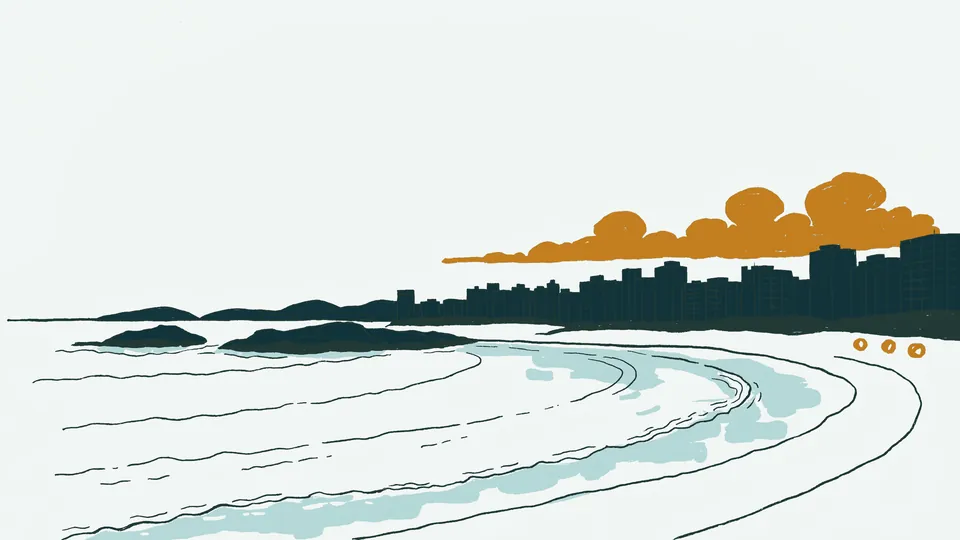

West coast · 32 km from the airport
October 2026 · n = 12


West coast · 42 km from the airport
October 2026 · n = 20
Direct-flight data for India is not collected yet; it is added with the first country refresh. Phuket's airport is Phuket International Airport (HKT), on the north of the island.
Visa rules for India passport holders are added with the first country refresh. Until then, check the official Thai e-Visa site — this page does not guess entry rules.
Thailand uses the Thai baht (THB). As of 2026-10-16, 1 INR = 0.3519 THB (1 THB = 2.84 INR), the last reference rate of the month from ECB via Frankfurter; that is −19.9% against the 2019 average, so purely from the exchange rate Phuket is 19.9% more expensive for a visitor paying in INR than it was in 2019. Index prices are observed in US dollars and converted at 1 USD = 94.96 INR; the chart on this page shows the monthly series since 2014.
High season is November to April — the dry months, with the highest prices. Low season, May to October, brings more rain and lower prices. The index tags every price with the season of the travel date, so both can be compared on the same page.
A weekly budget in INR is shown on this page, built from the index medians (hotel night, daily budget, airport transfer) and the dated exchange rate. It is an estimate from medians; a booking will differ by dates, property and season.
Thailand runs on 220 V, 50 Hz. Sockets take plug types A, B, C and O; most hotel sockets accept flat two-pin (A/B) and round two-pin (C) plugs, so travellers from Europe and North America rarely need more than a simple adapter.
Yes — Rawai and Chalong host the island's largest long-stay communities, and Bang Tao has the largest villa market. Monthly and seasonal rentals are arranged through VillaCarte, a Phuket agency; the enquiry form is at the end of this page.
Long-stay villa and apartment enquiries go to VillaCarte, a licensed Phuket agency. One message, a reply the same day.