


West coast · 18 km from the airport
Bang Tao
October 2026 · n = 13
Hotel 4★, per night$120+48%
- Villa 3-bed, per month
- $7,372
- Airport taxi, one-way
- $18
- A day, mid budget
- $41
Flights, visa, season and a weekly budget in KRW — for travellers from South Korea.
Month-end reference rates since January 2014: what one KRW buys in Thai baht, and what that does to the price of Phuket for you. A rising line means your money buys more baht.
Phuket is 5.5% more expensive for you than in 2019, purely from the exchange rate. 2019 average: 1 KRW = 0.0266 THB; latest month: 1 KRW = 0.0251 THB. 1 THB = 39.9 KRW.
Index medians (observed in US dollars) converted at the dated reference rates below — arithmetic, not a local price list.
| Item | USD | THB | KRW | Observed |
|---|---|---|---|---|
| Hotel 3★, island median, per night | $56 | 1,871 THB | ₩74,596 | October 2026 · n = 181 |
| Hotel 4★, island median, per night | $107 | 3,575 THB | ₩142,532 | October 2026 · n = 210 |
| Hotel 5★, island median, per night | $213 | 7,117 THB | ₩283,731 | October 2026 · n = 95 |
| Villa 3-bed, island median, per month | $5,941 | 198,519 THB | ₩7,913,834 | October 2026 · n = 148 |
| Airport taxi to Patong, one way | $24 | 802 THB | ₩31,970 | September 2026 · n = 16 |
| A day, mid budget, per person | $36 | 1,203 THB | ₩47,955 | September 2026 · n = 96 |
| Phi Phi day tour, per person | $63 | 2,105 THB | ₩83,920 | September 2026 · n = 6 |
Rates: 1 USD = 33.41 THB (2026-10-16); 1 KRW = 0.0251 THB (2026-10-16). 1 THB = 39.9 KRW. Reference rates, not cash rates — a Phuket bureau de change is typically 1–3% worse. Source: ECB via Frankfurter (USD); ECB via Frankfurter (KRW).
Index medians converted at the rate below. Prices are observed in US dollars; the conversion is arithmetic, not a local price list.
| Item | USD | KRW |
|---|---|---|
| Hotel 4★, one night | $120 | ₩159,849 |
| Villa 3-bed, one month | $5,692 | ₩7,582,148 |
| Airport taxi, one way | $24 | ₩31,304 |
| A day, mid budget, per person | $36 | ₩47,955 |
| A week for two: 4★ hotel, mid-budget days, transfers | $1,391 | ₩1,852,911 |
Island figure = median of the area medians with data (15 areas). Week for two = 7 hotel nights + 7 mid-budget days × 2 + airport taxi × 2. 1 USD = 1332 KRW — USD→THB 33.41 (ECB via Frankfurter, 2026-10-16) ÷ KRW→THB 0.0251 (ECB via Frankfurter, 2026-10-16)
Work permits are the only count by nationality: South Korea nationals on retirement, family, education or DTV visas are not in it. Reference points: the 2010 census counted 94,690 non-Thai residents (18.0%); the civil register held 9,345 non-Thai names at the end of 2025.
All foreigners in Phuket: work permits, census, population →
South Korea has been a Phuket market for thirty years, first as the honeymoon destination of choice and then as a family and golf market, and the island has a Korean layer that is easy to miss until you look: Korean restaurants and marts in Patong and Kata, Korean-speaking tour desks, golf packages built around Laguna and the Blue Canyon courses, and pool villas that were designed with Korean family groups in mind. Koreans also hold the longest visa-free stay of any visitor on this list, which has made Phuket a winter base for a small but growing number of remote workers.
Facts checked 2026-09-04; entry rules and schedules change — confirm before you fly.
As of September 2026, Korean Air and Asiana Airlines both fly nonstop from Seoul Incheon to Phuket, between them daily or better, on wide-body aircraft, with a flight time of about six and a quarter hours. Jin Air has operated the route as the low-cost option, and other Korean low-cost carriers have flown Incheon–Phuket and Busan–Phuket seasonally in past winters; check the schedule for your month, because these come and go. Asiana is due to be absorbed into Korean Air in December 2026, so flight numbers and branding will change while the seats remain.
One-stop options through Bangkok on Thai Airways, Korean Air and Asiana, or through Hong Kong, Taipei, Singapore and Kuala Lumpur, add two to four hours and open up Busan and the regional airports. Frequencies on the nonstop routes are highest from December to February and around Chuseok and Seollal.
Facts checked 2026-09-04; entry rules and schedules change — confirm before you fly.
South Korean citizens enter Thailand without a visa under a bilateral agreement. Checked 4 September 2026: the stay is 90 days per entry, the longest visa-free stay of any nationality on this site. The Royal Gazette notices of 31 August 2026 that cut Thailand's general visa exemption to 30 days from 15 September 2026 do not list South Korea; the Thai authorities state that separate bilateral arrangements continue to apply, and for Korea that is the 90-day agreement. Immigration officers may still ask for proof of onward travel and funds, and long or repeated stays attract questions.
Every traveller must complete the Thailand Digital Arrival Card online within three days before arrival; it is free, has a Korean-language interface, and immigration wants the QR code. For stays beyond 90 days, or for work, study and retirement, apply through the Thai e-Visa system before travelling. The planned Electronic Travel Authorisation had not launched as of the check date. Rules change; confirm with the Thai embassy in Seoul or the e-Visa site before you fly.
The Thai baht is the only currency you will use. Korean won is accepted at many exchange booths on the island, but the rates are noticeably worse than for US dollars; if you exchange cash, change won to dollars at home and dollars to baht in Phuket, or simply use cards. Korean Visa and Mastercard cards work in Thai ATMs and at hotels, restaurants and larger shops, and the travel cards from the Korean banks and fintechs with no foreign-transaction fee are the cheapest way to pay.
Thai ATMs add a fixed 220 baht per withdrawal on foreign cards; withdraw larger sums less often and decline the machine's offer to convert to won. Korean mobile wallets work at some Thai merchants through the Asian payment tie-ups, but coverage is patchy outside the malls and the airport; PromptPay QR codes need a Thai bank account. Carry cash for markets, taxis, boats and street food. Tipping is modest: round up taxis, leave small change at restaurants, and give a little to hotel and massage staff.
The Korean calendar suits Phuket well. Seollal (16–18 February 2027) and the winter school holidays from late December to February fall in the dry season, when the island's sea is at its best and its prices at their highest; the year-end and Seollal weeks sell out the Incheon flights. Chuseok (24–26 September 2026) lands at the end of the rainy season, when the west-coast beaches are still often red-flagged but the east coast, Phuket Town and the resort pools are fine, and the prices are low.
The Korean summer holiday, late July to mid-August, is Phuket's monsoon: warm, cheap, wet in the afternoons, with the island boats restricted; families who travel then choose a resort with big pools or the east coast. Golf is playable year-round, with the driest fairways from December to March. For remote workers using the 90-day exemption, arriving in early November and leaving in late January is the popular pattern.
Thailand runs on 220 volts with sockets that take the two-pin round plug, the same as Korea's, so chargers fit without an adapter; only earthed plugs sit loosely. Driving is on the left, the opposite of Korea, which catches scooter riders at every junction on the first day; an international driving permit is required, and the Korean licence alone will not satisfy the police or an insurer. Rental-car companies at the airport are used to Korean drivers.
Buy a Thai SIM at the airport or an eSIM before you fly; Korean roaming packages for Thailand are reasonable but not cheap. Tap water is not for drinking. Temples want covered shoulders and knees and shoes off. Korean food is available in Patong and Kata and increasingly in Bang Tao, and Thai food is spicier and sweeter than Korean; ask for less chilli if needed. Thai medical care in the private hospitals is excellent and much cheaper than at home, but wants an insurance card or deposit for anything beyond emergencies. Alcohol is not sold in shops between 2pm and 5pm. Thais are quiet in public and value patience; the pace is slower than Seoul's.
By observation, Korean visitors on packages and honeymoons stay in Patong, especially the quieter Kalim end, and in Kata and Karon, where the resorts have long catered to the Korean market; families and groups take pool villas in Bang Tao, Layan and Kamala, and golfers base themselves at Laguna. The luxury end, Surin and the Millionaires' Mile of Kamala, draws Korean couples for anniversaries and photographs.
Long-stayers from Korea are a newer group: remote workers and families using the 90-day exemption, mostly in Bang Tao and Phuket Town, and a few retirees in Rawai. If you are planning a month or longer, the form below goes to a Phuket agency that handles monthly villa and apartment rentals.
Visa and flight facts are referenced on the Sources page.
West coast · 18 km from the airport
October 2026 · n = 13
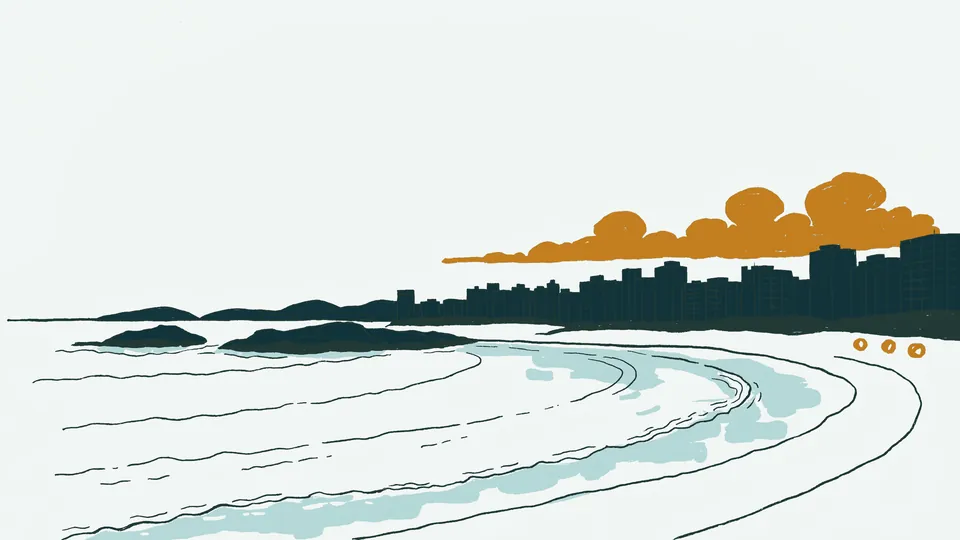

West coast · 32 km from the airport
October 2026 · n = 12


West coast · 42 km from the airport
October 2026 · n = 20
Direct-flight data for South Korea is not collected yet; it is added with the first country refresh. Phuket's airport is Phuket International Airport (HKT), on the north of the island.
Visa rules for South Korea passport holders are added with the first country refresh. Until then, check the official Thai e-Visa site — this page does not guess entry rules.
Thailand uses the Thai baht (THB). As of 2026-10-16, 1 KRW = 0.0251 THB (1 THB = 39.9 KRW), the last reference rate of the month from ECB via Frankfurter; that is −5.5% against the 2019 average, so purely from the exchange rate Phuket is 5.5% more expensive for a visitor paying in KRW than it was in 2019. Index prices are observed in US dollars and converted at 1 USD = 1,332 KRW; the chart on this page shows the monthly series since 2014.
High season is November to April — the dry months, with the highest prices. Low season, May to October, brings more rain and lower prices. The index tags every price with the season of the travel date, so both can be compared on the same page.
A weekly budget in KRW is shown on this page, built from the index medians (hotel night, daily budget, airport transfer) and the dated exchange rate. It is an estimate from medians; a booking will differ by dates, property and season.
Thailand runs on 220 V, 50 Hz. Sockets take plug types A, B, C and O; most hotel sockets accept flat two-pin (A/B) and round two-pin (C) plugs, so travellers from Europe and North America rarely need more than a simple adapter.
Yes — Rawai and Chalong host the island's largest long-stay communities, and Bang Tao has the largest villa market. Monthly and seasonal rentals are arranged through VillaCarte, a Phuket agency; the enquiry form is at the end of this page.
Long-stay villa and apartment enquiries go to VillaCarte, a licensed Phuket agency. One message, a reply the same day.