


West coast · 18 km from the airport
Bang Tao
October 2026 · n = 13
Hotel 4★, per night$120+48%
- Villa 3-bed, per month
- $7,372
- Airport taxi, one-way
- $18
- A day, mid budget
- $41
Flights, visa, season and a weekly budget in RUB — for travellers from Russia.
Month-end reference rates since January 2014: what one RUB buys in Thai baht, and what that does to the price of Phuket for you. A rising line means your money buys more baht.
Phuket is 16.3% more expensive for you than in 2019, purely from the exchange rate. 2019 average: 1 RUB = 0.4794 THB; latest month: 1 RUB = 0.4011 THB. 1 THB = 2.49 RUB.
Index medians (observed in US dollars) converted at the dated reference rates below — arithmetic, not a local price list.
| Item | USD | THB | RUB | Observed |
|---|---|---|---|---|
| Hotel 3★, island median, per night | $56 | 1,871 THB | RUB 4,665 | October 2026 · n = 181 |
| Hotel 4★, island median, per night | $107 | 3,575 THB | RUB 8,914 | October 2026 · n = 210 |
| Hotel 5★, island median, per night | $213 | 7,117 THB | RUB 17,744 | October 2026 · n = 95 |
| Villa 3-bed, island median, per month | $5,941 | 198,519 THB | RUB 494,911 | October 2026 · n = 148 |
| Airport taxi to Patong, one way | $24 | 802 THB | RUB 1,999 | September 2026 · n = 16 |
| A day, mid budget, per person | $36 | 1,203 THB | RUB 2,999 | September 2026 · n = 96 |
| Phi Phi day tour, per person | $63 | 2,105 THB | RUB 5,248 | September 2026 · n = 6 |
Rates: 1 USD = 33.41 THB (2026-10-16); 1 RUB = 0.4011 THB (2026-10-17). 1 THB = 2.49 RUB. Reference rates, not cash rates — a Phuket bureau de change is typically 1–3% worse. Source: ECB via Frankfurter (USD); Bank of Russia (RUB).
Index medians converted at the rate below. Prices are observed in US dollars; the conversion is arithmetic, not a local price list.
| Item | USD | RUB |
|---|---|---|
| Hotel 4★, one night | $120 | RUB 9,997 |
| Villa 3-bed, one month | $5,692 | RUB 474,168 |
| Airport taxi, one way | $24 | RUB 1,958 |
| A day, mid budget, per person | $36 | RUB 2,999 |
| A week for two: 4★ hotel, mid-budget days, transfers | $1,391 | RUB 115,876 |
Island figure = median of the area medians with data (15 areas). Week for two = 7 hotel nights + 7 mid-budget days × 2 + airport taxi × 2. 1 USD = 83.3 RUB — USD→THB 33.41 (ECB via Frankfurter, 2026-10-16) ÷ RUB→THB 0.4011 (Bank of Russia, 2026-10-17)
Work permits are the only count by nationality: Russia nationals on retirement, family, education or DTV visas are not in it. Reference points: the 2010 census counted 94,690 non-Thai residents (18.0%); the civil register held 9,345 non-Thai names at the end of 2025.
All foreigners in Phuket: work permits, census, population →
Russians have been coming to Phuket for a quarter of a century and, in the winters since 2022, in larger numbers than ever, because the island stayed open and reachable when much of the rest of the world became complicated. The result is a Russian-speaking layer across the whole island: schools, clinics, real-estate offices, bakeries, kindergartens, Telegram channels for every district, and a resident community in Bang Tao, Rawai and Karon that measures itself in tens of thousands.
Facts checked 2026-09-04; entry rules and schedules change — confirm before you fly.
As of September 2026, Moscow has daily nonstop service to Phuket: Aeroflot flies from Sheremetyevo year-round on wide-body aircraft, with Nordwind and Azur Air adding flights from Sheremetyevo and Vnukovo that are densest from October to April. Flight time is nine and a half to ten hours. In the winter schedule, nonstop and charter-style flights also run from a dozen regional cities, including Novosibirsk, Yekaterinburg, Krasnoyarsk, Irkutsk, Khabarovsk and Vladivostok, on Aeroflot, S7, Nordwind, Azur Air and Ikar; from Siberia and the Far East the flight is six to eight hours.
Outside the winter season the regional routes thin out and many travellers connect through Bangkok, or through Dubai, Abu Dhabi, Doha, Tashkent or Almaty on Emirates, Etihad, Qatar Airways, Uzbekistan Airways and Air Astana. Schedules for this market change with the season and the sanctions environment; check the airline for the month you are flying, and be aware that Russian-issued cards cannot buy tickets on most foreign airline sites.
Facts checked 2026-09-04; entry rules and schedules change — confirm before you fly.
Russian citizens enter Thailand without a visa under a bilateral agreement. Checked 4 September 2026: the stay is 30 days per entry. Russia was covered by the general 60-day exemption from mid-2024, but the Royal Gazette notices of 31 August 2026 that cut the general exemption to 30 days from 15 September 2026 do not list Russia; the Thai authorities state that separate bilateral arrangements continue to apply, and for Russia that is the 30-day agreement. A single extension of up to 30 days can be requested at Phuket's immigration office for a fee, at the officer's discretion.
Every arriving traveller must complete the Thailand Digital Arrival Card online within three days before arrival; it is free and immigration wants the QR code. Cumulative stays under the exemption are watched: immigration officers may question anyone who has spent close to 90 days in Thailand in the past 180. For longer stays, the Destination Thailand Visa (DTV) for remote workers and the tourist and education visas through the Thai e-Visa system are the routes; the planned ETA for visa-exempt visitors had not launched as of the check date. Rules change; confirm before flying.
Money is the hard part of a Russian trip to Thailand. Visa and Mastercard cards issued by Russian banks have not worked abroad since 2022, and Mir is not accepted in Thailand. UnionPay cards from some Russian banks work in some Thai ATMs and shops, unreliably. The practical answer is cash: US dollars or euros in new, unmarked, large-denomination notes, which Phuket's exchange booths take at good rates. Roubles are accepted by a few booths, at rates that punish you for it. Small or old dollar notes get a worse rate; torn notes are refused.
Thai ATMs charge 220 baht per withdrawal on foreign cards, which matters only if you have a working foreign card. Some residents open Thai bank accounts, which is possible with a long-stay visa and patience, and then use PromptPay QR codes like everyone else. Cryptocurrency-to-baht exchanges operate in Phuket; use a licensed one. Tipping is modest: round up taxis, leave small change at restaurants, and tip massage and hotel staff a little.
The Russian year fits Phuket's better than almost any other market's. The New Year holidays, from late December into the first week of January, are the island's peak fortnight, and Russian families book them a year ahead; the school winter break in February and the spring holiday around Women's Day and the May holidays all fall inside or at the edge of the dry season. Phuket from November to April is the Russian winter escape, and the villas in Bang Tao and Layan are full of families staying for months rather than days.
The Russian summer holiday, June to August, is Phuket's wet season: cheaper, wetter, with red flags on the west coast on many days, but still warm and popular with families who want three months of sea and do not mind an afternoon storm. October, when the rains ease and the rates have not yet risen, is the value month. For anyone considering the whole winter, arriving in early November gets the best choice of villas.
Thailand runs on 220 volts with sockets that take the two-pin European plug, so Russian chargers fit without an adapter; only earthed Schuko plugs sit loosely, and a cheap adapter fixes that. Driving is on the left, the opposite of Russia, and this catches scooter riders on the first day at every junction; an international driving permit is required for scooters and cars, and the Russian domestic licence alone will not satisfy the police or the insurer.
Buy a Thai SIM at the airport or an eSIM before you fly; Russian roaming is very expensive. Tap water is not for drinking. Temples want covered shoulders and knees and no shoes. Russian is spoken in many shops and clinics in Bang Tao, Karon and Rawai, and Russian-language menus are common, but English is the working language elsewhere on the island, and a little Thai politeness goes a long way. Loud voices and confrontation are counter-productive here; calm and patience are the fastest route through any problem. Alcohol is not sold in shops from 2pm to 5pm.
By observation, Russian-speaking visitors and residents concentrate in three places: Bang Tao and Layan in the north-west, where the villa estates, the international schools and the newer condominium projects are, and which has become the district of choice for families staying the season; Karon and Kata, where the package-holiday market has been Russian for two decades and the hotels, restaurants and shops reflect it; and Rawai and Nai Harn in the south, where a large long-stay community of families and remote workers lives in houses and villas among the cafés.
Patong still takes the largest share of short package stays, mainly for the price and the nightlife. Long-stayers rarely choose it. If you are planning a month or a winter, the form below goes to a Phuket agency that works the monthly villa and apartment market in these districts and answers in Russian.
Visa and flight facts are referenced on the Sources page.
West coast · 18 km from the airport
October 2026 · n = 13
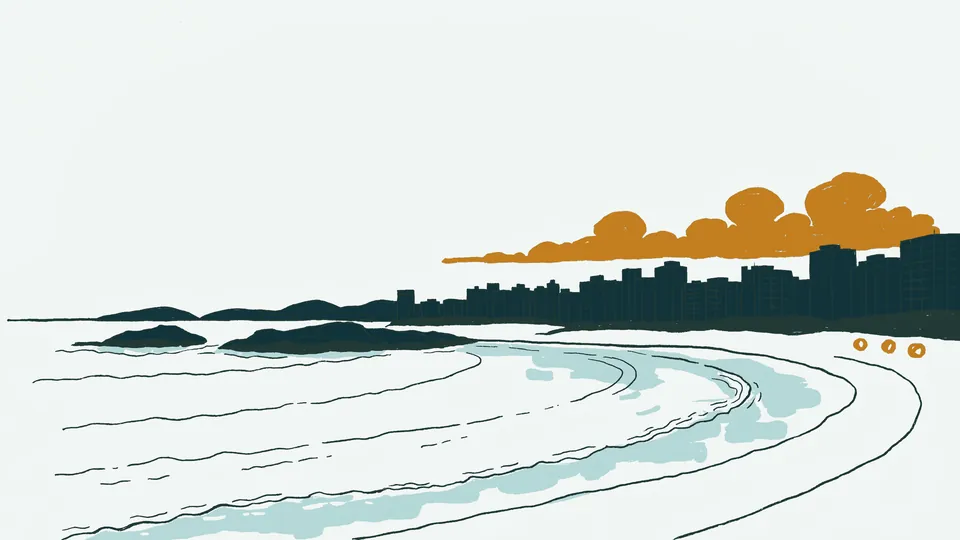

West coast · 32 km from the airport
October 2026 · n = 12


West coast · 42 km from the airport
October 2026 · n = 20
Direct-flight data for Russia is not collected yet; it is added with the first country refresh. Phuket's airport is Phuket International Airport (HKT), on the north of the island.
Visa rules for Russia passport holders are added with the first country refresh. Until then, check the official Thai e-Visa site — this page does not guess entry rules.
Thailand uses the Thai baht (THB). As of 2026-10-17, 1 RUB = 0.4011 THB (1 THB = 2.49 RUB), the last reference rate of the month from Bank of Russia; that is −16.3% against the 2019 average, so purely from the exchange rate Phuket is 16.3% more expensive for a visitor paying in RUB than it was in 2019. Index prices are observed in US dollars and converted at 1 USD = 83.3 RUB; the chart on this page shows the monthly series since 2014.
High season is November to April — the dry months, with the highest prices. Low season, May to October, brings more rain and lower prices. The index tags every price with the season of the travel date, so both can be compared on the same page.
A weekly budget in RUB is shown on this page, built from the index medians (hotel night, daily budget, airport transfer) and the dated exchange rate. It is an estimate from medians; a booking will differ by dates, property and season.
Thailand runs on 220 V, 50 Hz. Sockets take plug types A, B, C and O; most hotel sockets accept flat two-pin (A/B) and round two-pin (C) plugs, so travellers from Europe and North America rarely need more than a simple adapter.
Yes — Rawai and Chalong host the island's largest long-stay communities, and Bang Tao has the largest villa market. Monthly and seasonal rentals are arranged through VillaCarte, a Phuket agency; the enquiry form is at the end of this page.
Long-stay villa and apartment enquiries go to VillaCarte, a licensed Phuket agency. One message, a reply the same day.