The Old Town: shophouse cafés, the Sunday walking street and the island's best food.
Best for
digital-nomads · budget · long-stay · quiet
Nearest hospital
Vachira Phuket Hospital (public, in town); Bangkok Hospital Phuket and Bangkok Hospital Siriroj, both in town
International schools nearby
HeadStart International School (Chao Fa West Road, 10–15 min) · British International School Phuket (Koh Kaew, 15 min)
The lie of the land
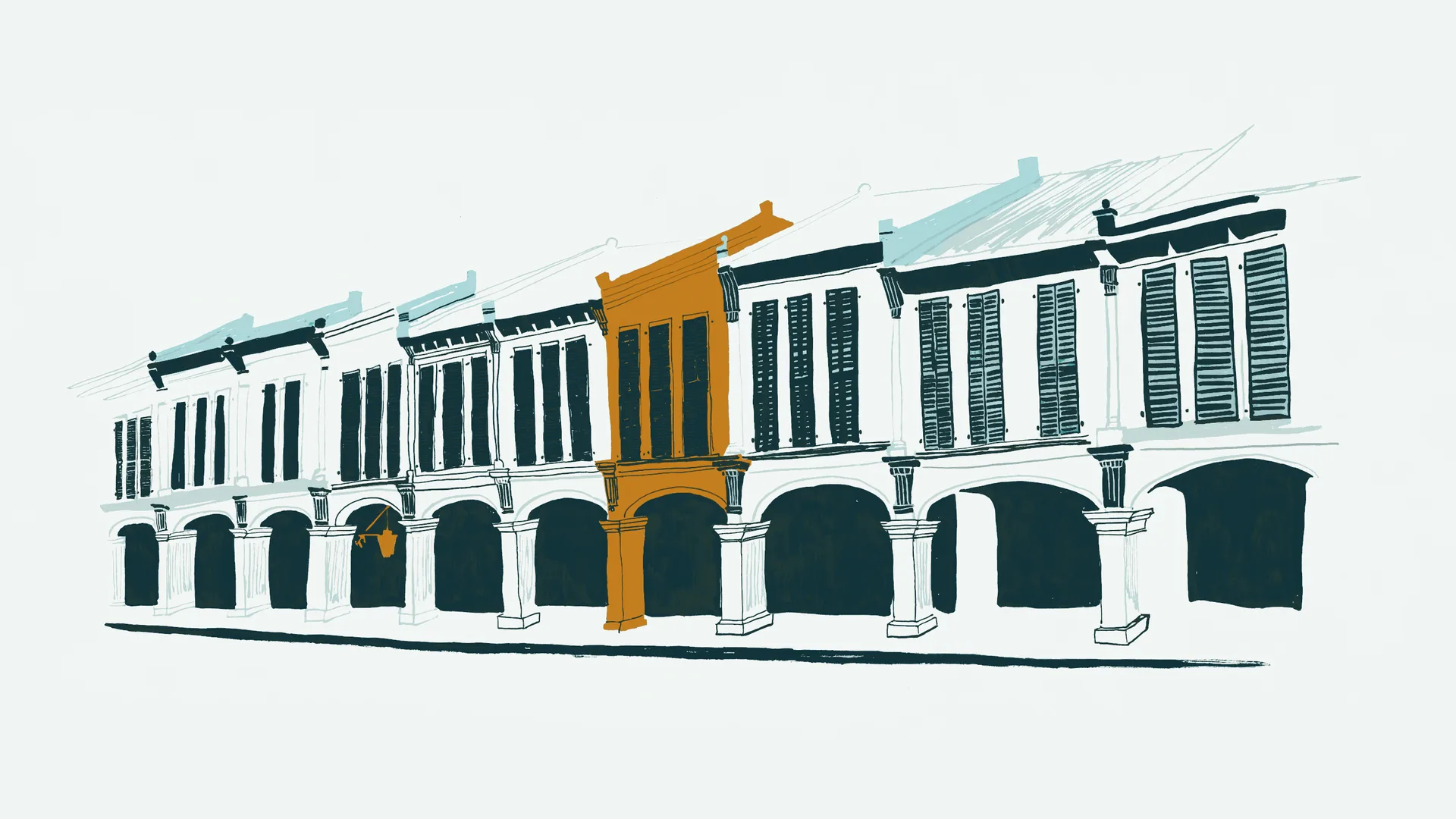
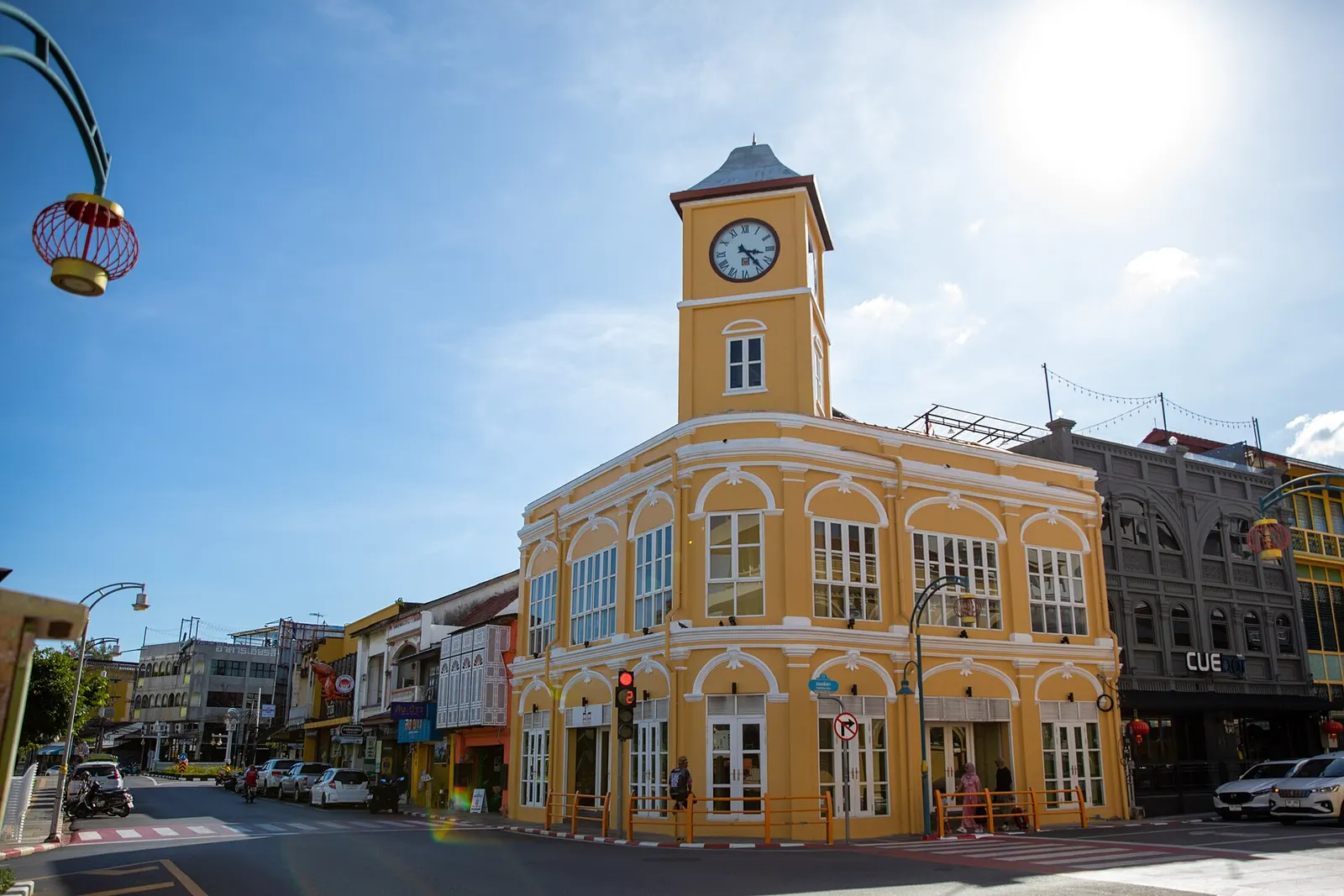
Phuket Town is the island's capital and the only district that would be worth visiting if there were no beach at all. The Old Town, a grid of streets around Thalang Road, Dibuk Road, Krabi Road and Soi Romanee, is what tin-mining money built a century ago: two- and three-storey shophouses with arched arcades, Chinese shrines and a few mansions in the style that Penang and Malacca share. Around it is a real provincial town with a bus terminal, a central market, hospitals, government offices and the island's two big malls.
It suits anyone who cares about food, coffee and architecture more than about sand, remote workers who want cafés and a town rather than a resort, travellers on a budget, and long-stayers who like living in a place that does not depend on tourism. It suits beach-first holidaymakers only as a day trip, because the nearest good beaches are half an hour away.
Beach and sea
There is no beach in Phuket Town. Saphan Hin, the park on the southern seafront, is a running track, a sea wall and the venue for the island's festivals; the water is a working harbour. The nearest swimming is at Ao Yon on the Panwa cape, about twenty minutes south-east, a sheltered east-coast bay that is calm year-round. Kata and Karon are thirty to forty minutes west.
What the town has instead is the sea in its history: the Chinese shophouses were built with tin money, the Vegetarian Festival in the ninth lunar month (usually October) fills the streets with processions from the town's shrines, and the Sunday walking street on Thalang Road is the island's biggest weekly event. The town is also the natural base for Koh Yao and the Phang Nga Bay islands, whose ferries leave from Bang Rong and Rassada piers on the east coast.
Where to stay
The Old Town's accommodation is boutique: renovated shophouses like The Memory at On On Hotel, the oldest hotel on the island, Casa Blanca Boutique Hotel on Phuket Road, and a dozen small guesthouses in the grid, plus a good stock of hostels for the backpacker and remote-work crowd. Outside the Old Town, the chain hotels are business-oriented: Courtyard by Marriott Phuket Town, and mid-range hotels near the malls and the bus terminal.
There are no beach resorts and no villas in the resort sense, but the hills around town, especially Khao Rang and the road towards Koh Kaew, have houses and townhouses, and the condominium supply is the island's largest by number, in mid-rise buildings across the town and its suburbs. Rents are set for Thai residents, which makes them the island's lowest for the quality.
Eating out
This is the island's food capital, and the claim is not marketing. Hokkien mee at Mee Ton Poe by the clock tower, Kopitiam by Wilai on Thalang Road for the local breakfast, Lock Tien food court on Dibuk Road for a dozen Phuket dishes under one roof, One Chun and Raya for the Peranakan-Thai cooking that Phuket's Chinese families made their own, and Torry's Ice Cream on Soi Romanee afterwards. The Sunday walking street on Thalang Road (Lard Yai) is the weekly street-food fair; Naka Market, the weekend night market near Central, is the big open-air one.
The café scene is the island's best by a distance, and Blue Elephant occupies a governor's mansion for Thai fine dining. Everything is cheaper here than at the beaches, because the customers are locals.
Getting around
Phuket Town is thirty-two kilometres from the airport, about forty-five minutes by taxi or an hour by the Airport Bus Express, which runs to the town and the bus terminal. Grab and Bolt are everywhere. The Old Town is compact and walkable, with some of the island's only real pavements; the town beyond it is spread out and hot.
Songthaews to the beaches leave from Ranong Road near the central market and are the cheapest way to reach the west coast, slowly. The Phuket Smart Bus does not serve the town; the bus terminal (Terminal 2, north of the centre) is the departure point for Krabi, Surat Thani and Bangkok. Scooters are practical for the town and its suburbs, and the traffic is heavy but slow.
Staying a month or longer
The monthly market in and around town is the island's largest and cheapest: condominiums in mid-rise buildings from the Old Town edge to the Koh Kaew suburb, townhouses in the residential districts, and a small number of restored shophouses that rent as homes or home-offices. Furnished one-bedroom apartments with a pool and gym are standard, and terms of a month are easy to find year-round because the market does not depend on the tourist season.
Who lives here: remote workers and small-business owners who want cafés, coworking and a town at their door; teachers and staff at the hospitals and schools; and a growing number of long-stayers who tried the beaches and decided they preferred a place with a Sunday market and a bus terminal. If you are considering a month or longer, the form below goes to VillaCarte; the town's supply is wide, so say whether you want the Old Town on foot or a newer building with parking.
The honest downsides
No beach, and the beaches are half an hour away in traffic that gets worse every year; the bypass road and the Chalong route are slow in both rush hours. The town is hot and short of shade outside the arcades, and the suburbs are ordinary and car-oriented. Flooding after heavy rain is a recurring problem on the low streets near the harbour.
The Old Town has become a photo backdrop, and Thalang Road on a Sunday evening is crowded. Nightlife is a few bars and a small live-music scene rather than a strip. And a long stay here means a different island from the one in the brochures; some people find that a relief and some do not.
Buying in Phuket Town: Layan Real Estate
One project in Phuket Town in the Layan Real Estate catalogue on September 5, 2026: the district figures, its entry price and the tour that shows it.
small sample
Median price per m² · n = 0
$2,230,230
Median entry price · n = 1
6%
Declared yield, median · island-wide projections · n = 281
Island-wide medians 2015–2025: bar and number = rain in mm, mark = west-coast sea state, top line = climate season.
37
○
Jan
21
○
Feb
73
○
Mar
183
○
Apr
343
◐
May
275
◐
Jun
241
●
Jul
270
●
Aug
309
●
Sep
340
○
Oct
270
○
Nov
113
○
Dec
bar: median rain, mm○ calm · ◐ some swell · ● roughHigh season: Nov–Mar · Shoulder: Apr, Oct · Green season: May–Sep
Source: Open-Meteo (ERA5), 2015–2026. One reanalysis point for the island, so the strip is the same on every area page; the west coast takes the monsoon swell, the east and south coasts do not. Full month-by-month data →
Estimate a Phuket trip
Pick an area, nights, travellers and budget class — the estimate uses the index medians for that area.
Estimated total
$1,022
Stay · Rooms 1
$413
Food and days out
$448
Airport transfers
$42
One day tour per traveller
$119
Default parameters, rendered at build time so it works without JavaScript: Phuket Town, 7 nights, 2 travellers, Mid-range. Medians as of October 2026
Estimates use medians from the index; your booking will differ by dates, property and season.
Frequently asked questions
How much does a 4-star hotel in Phuket Town cost per night?
As of October 2026, the median 4-star hotel night in Phuket Town is $59 per night (n = 12, high season, range $46–$92). The observation is taken for a travel date 30 days ahead; 3-star and 5-star medians are in the price table on this page.
What does a 3-bedroom villa in Phuket Town cost per month?
As of October 2026, the median 3-bedroom villa in Phuket Town is $3,517 per month (n = 5, high season, range $3,029–$5,257). Monthly rentals from one month upward are handled by VillaCarte, a Phuket agency; the enquiry form is on this page.
How far is Phuket Town from Phuket airport, and what does a taxi cost?
Phuket Town is 32 km from Phuket International Airport. As of September 2026, the median metered-taxi fare from the airport in Phuket Town is $21 one way, daytime (n = 7, all year season, range $11–$27). Minivan and ride-hailing medians are in the transfers table.
How much do I need per day in Phuket Town?
As of September 2026, the median mid-range daily budget in Phuket Town is $32 per day (n = 11, all year season, range $22–$49). The daily budget covers meals, local transport and one activity, and is published at three levels: street-food, mid-range and fine-dining.
What is Phuket Town like?
Sino-Portuguese Old Town on Thalang Road: shophouse cafés, the Sunday walking street and the island's food capital. Location: East coast, 32 km from the airport.
Which areas are next to Phuket Town?
Chalong, Panwa. The price table on this page shows Phuket Town against these neighbours, so a cheaper night or month a few kilometres away is visible at a glance.
Can I rent in Phuket Town for a month or longer?
Yes. Monthly villa and apartment rentals in Phuket Town are arranged through VillaCarte, a licensed Phuket agency; send the area, budget and dates through the form on this page and they reply the same day. The index figures are independent of these enquiries.
Staying a month or longer? Monthly villa and apartment rentals are handled by VillaCarte, a Phuket agency. Tell them the area, budget and dates — they reply the same day.